When someone is going through substance abuse treatment, getting better is usually the first priority. But after treatment, another question often comes up:
What should I do with my life now?
For some people, the answer may be going back to school, learning a new skill, or getting training for a better job. Education can be a good way to build a more stable future after addiction recovery.
The problem is that education can be expensive. Tuition, books, fees, transportation, and other costs can make it difficult for someone in recovery to return to school.
If you live in Florida, there are several options that may help you pay for your education. However, it is important to understand one thing before looking at these programs.
Florida does not have a general program that gives free college tuition to everyone simply because they are receiving substance abuse treatment.
Instead, a person in treatment or recovery may qualify for different types of financial assistance. This can include federal grants, Florida financial aid, workforce training programs, and scholarships for people in recovery.
Let’s look at some of these options.
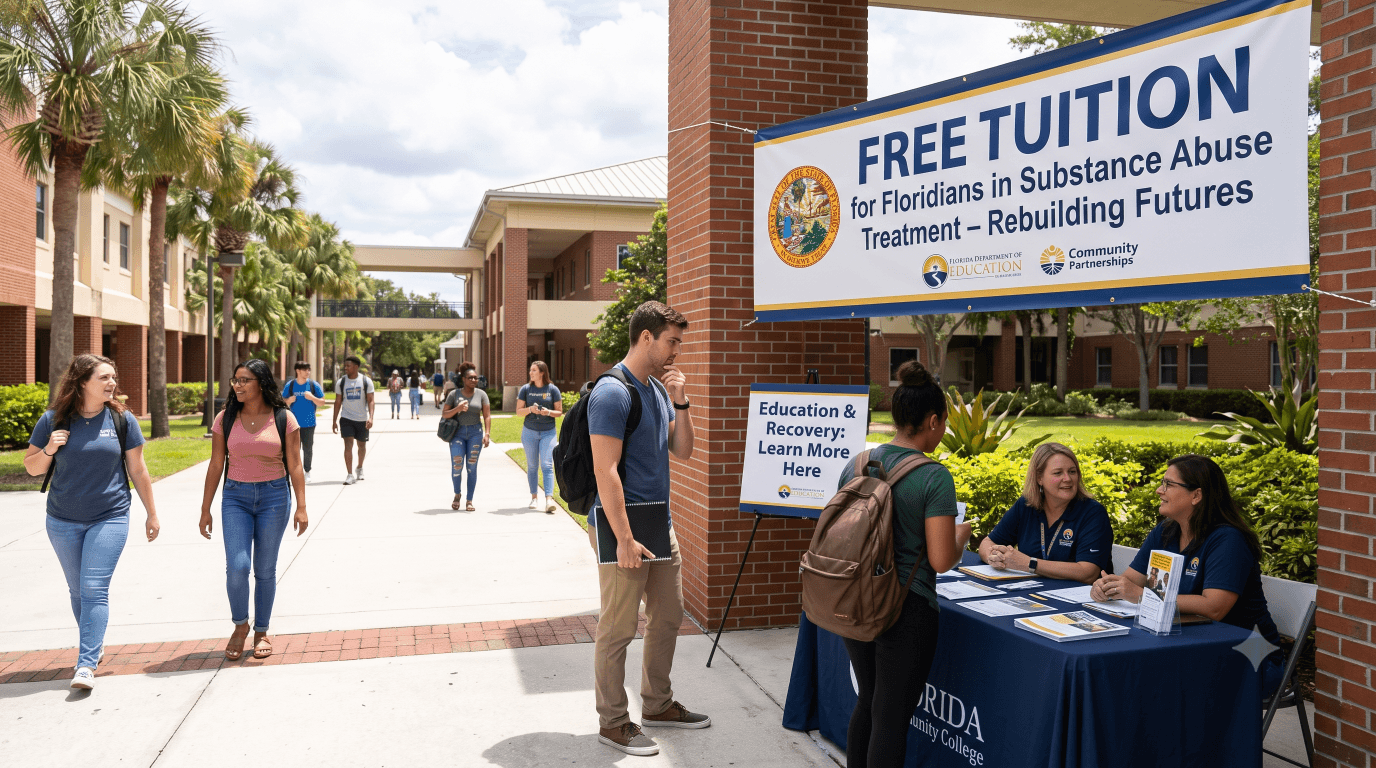
Can You Get Free Tuition While in Substance Abuse Treatment?
Being in substance abuse treatment does not automatically make someone eligible for free college tuition. Your eligibility will depend on several things, such as your income, residency, school, type of program, and other financial aid requirements.
However, this does not mean that you have to pay the full cost of school yourself.
Many students receive help from more than one source. For example, a student may receive a federal Pell Grant, a Florida grant, and a scholarship from the school or another organization.
When these types of assistance are combined, the amount that the student needs to pay can become much smaller.
This is why it is worth checking every option before deciding that college or training is too expensive.
Start With the FAFSA
If you are planning to attend college or an eligible career school, one of the first things you should do is complete the Free Application for Federal Student Aid (FAFSA).
The FAFSA is used to determine whether you qualify for federal student aid. It can also be used by schools and states when deciding eligibility for certain financial aid programs.
One of the main programs available through federal student aid is the Pell Grant.
For the 2026–27 award year, the maximum Federal Pell Grant is $7,395. The amount a student actually receives can be lower depending on their financial situation, enrollment status, school costs, and other factors.
The important thing about a Pell Grant is that it is a grant, not a normal student loan. Eligible students generally do not have to repay the grant.
If you are in recovery and want to continue your education, don’t assume that you will not qualify for financial aid. Complete the FAFSA and let the financial aid process determine what you may be eligible to receive.
Check Florida Student Financial Aid
Florida also has its own student financial aid programs. One program you may want to look at is the Florida Student Assistance Grant (FSAG).
FSAG provides need-based financial assistance to eligible Florida students who attend participating institutions. There are different versions of the program, and the requirements can vary depending on the type of student and school.
Your financial situation, enrollment, Florida residency, and other requirements may affect your eligibility.
This is why it is a good idea to speak with the financial aid office at the college you are considering. They can help you understand which Florida programs may apply to you.
You can also check the current requirements through the Florida Office of Student Financial Assistance because program rules and deadlines can change.
Look at Career Training Programs
College is not the only way to improve your career after recovery. In fact, some people may benefit more from a shorter career training program.
Florida has workforce education programs that can help eligible people receive training for jobs that are in demand. One program worth looking into is the Open Door Grant Program.
Depending on the program and your eligibility, this type of assistance may help with the cost of workforce education and training.
You could look at programs related to healthcare, welding, HVAC, construction, automotive work, information technology, and other skilled careers.
The available programs will depend on your location and the school or training provider.
If you want to start working sooner instead of spending several years completing a degree, career training may be worth considering.
Look for Scholarships for People in Recovery
Another option that many people may not know about is recovery-specific scholarships.
Some organizations provide education assistance to people who are in recovery from substance use. These scholarships are usually not available to everyone, and some have specific requirements based on location, recovery status, financial need, or the type of education you plan to pursue.
One example is the Mark Garwood Foundation Phoenix Scholarship.
The foundation offers scholarships to eligible people in recovery in certain parts of South Florida. The scholarship can provide up to $5,000 to help with education expenses such as tuition and books.
There are specific eligibility requirements, including geographic restrictions, so you should check the current requirements before applying.
The important lesson here is that you should not only search for general college scholarships. Look for scholarships that are specifically connected to recovery, addiction, or substance use treatment.
Ask Your College About Recovery Programs
When you contact a college, don’t only ask about regular financial aid. You should also ask whether the college has a recovery program or scholarships for students who are in recovery.
Some colleges have Collegiate Recovery Programs. These programs are designed to support students who are working on their recovery while attending school.
The support can be different from one college to another. Some programs may provide a recovery community, meetings, counseling referrals, academic support, or other resources.
Some schools may also have scholarships or smaller forms of financial assistance.
For example, the University of Central Florida has offered a book scholarship for students participating in its recovery community. A scholarship like this may not pay for your entire education, but help with books can still reduce your overall cost.
So when you speak to a college, ask questions. You may find an opportunity that is not obvious from the college’s main scholarship page.
What If You Want to Work in Addiction Recovery?
Your experience with addiction and recovery may also influence the type of career you want to build.
Some people who have gone through recovery decide that they want to help others who are facing similar problems. If that is your goal, there are education and certification options related to recovery support.
For example, the Florida Certification Board has a scholarship program connected with the Certified Recovery Support Specialist, or CRSS, credential.
The program can provide assistance with certain certification-related fees for eligible applicants.
This is not the same as getting free college tuition, but it can still be useful if your goal is to work in the recovery field.
A certification can also give you a way to turn your personal experience into a professional skill.
You Don’t Always Need a Four-Year College Degree
When people hear the word “education,” they often think about a four-year college degree. But that is not the only option available.
You can also learn a trade, complete a certificate program, or take career training that prepares you for a specific job.
For someone rebuilding their life after substance abuse, this can sometimes be a practical choice. A shorter program may cost less and allow you to start working sooner.
Before choosing a school, think about the type of work you want to do. Then find out what training or education is actually required for that job.
You may discover that you don’t need an expensive four-year degree to reach your goal.
How to Find Free or Low-Cost Education in Florida
If you are currently in treatment or are already in recovery, I would start with a few simple steps.
First, complete the FAFSA and find out what federal financial aid you may qualify for. Don’t decide that you won’t qualify before you actually check.
Next, contact the college or training school you are interested in. Ask about grants, scholarships, recovery programs, and other forms of financial assistance.
You should also check Florida’s student financial aid programs and see whether you meet the requirements for any state grants.
After that, search for scholarships specifically for people in recovery. You can use search terms such as “Florida recovery scholarship,” “addiction recovery scholarship Florida,” or “substance abuse recovery scholarship Florida.”
Finally, speak with your treatment center, counselor, or case manager. They may know about local education programs, job training, or scholarships that are not easy to find through a normal Google search.
Can You Go to School While You Are in Treatment?
This depends on your treatment program and your personal situation.
Some people may be able to take classes while they are receiving treatment, while others may need to focus completely on their recovery first.
There is no need to rush into school simply because financial assistance is available. Your recovery should remain an important part of the decision.
If you think education could be helpful, talk with your treatment team and explain what you want to do. You can also speak with the school about flexible schedules or online classes if those options are available.
For some people, education can become an important part of rebuilding their life after addiction. For others, it may make more sense to finish treatment first and then start school.
Both choices are okay.
Does Florida Pay College Tuition if You Are in Rehab?
The simple answer is no, not automatically.
Being in rehab or receiving substance abuse treatment does not by itself make someone eligible for free college tuition in Florida.
However, you may qualify for financial help because of your income, Florida residency, the school you attend, the program you choose, or your participation in a recovery program.
You may also find a scholarship that is specifically designed for people in recovery.
The best approach is to look at several options instead of relying on one program.
For example, you might qualify for a Pell Grant and a Florida grant. You could also receive a school scholarship or a recovery scholarship.
Every dollar of assistance can reduce the amount you have to pay yourself.
Don’t Let the Cost Stop You From Looking
Going back to school after addiction can feel difficult. You may already have financial problems, family responsibilities, or other things you are trying to manage.
That does not mean education is out of reach.
Start small and look at your options one at a time. Complete the FAFSA, talk to a school, ask about recovery scholarships, and check career training programs in your area.
You do not have to figure everything out on the same day.
The most important thing is to start asking questions.
Your recovery can be the beginning of a different life. Education or job training may be one part of building that life.
If you are ready to move forward, don’t assume that you have to pay the full cost of education yourself. There may be financial help available, and the first step is simply finding out what you qualify for.
Note: Financial aid rules, scholarship amounts, eligibility requirements, and application deadlines can change. Always check the current information with the school, scholarship provider, or government agency before applying.

Rose Smith is a writer and editor with a passion for creating clear, informative, and engaging content. She specializes in health, wellness, addiction recovery, and lifestyle topics, helping readers make informed decisions through well-researched, easy-to-understand articles. With a strong editorial background and a commitment to accuracy, Rose focuses on producing trustworthy content that educates, inspires, and supports people seeking reliable information.